
What AI code generation really costs
Most pricing pages for AI development tools are vague in the same way: a plan name, a monthly figure, and "credits" without saying what a credit buys. That vagueness is not an accident — it is hard to publish a number when the underlying cost varies with the model, the prompt and how much code comes back.
But it makes the tools impossible to budget for, so here is the arithmetic without the marketing.
What each operation costs
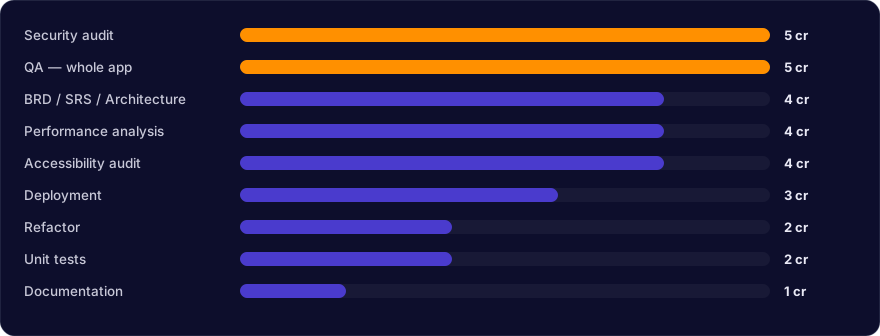
The pattern is not arbitrary. Cost tracks how much of your codebase the agent has to read and reason about. Documentation on one file is cheap. A security audit across the whole project — auth paths, injection surfaces, secrets, the OWASP list — is the most expensive thing on the menu, and so is a full QA pass looking for unwired flows.
The planning agents sit in the middle at 4 credits: a BRD, an SRS or an architecture document each read your requirements rather than your whole repository.
What a month actually buys
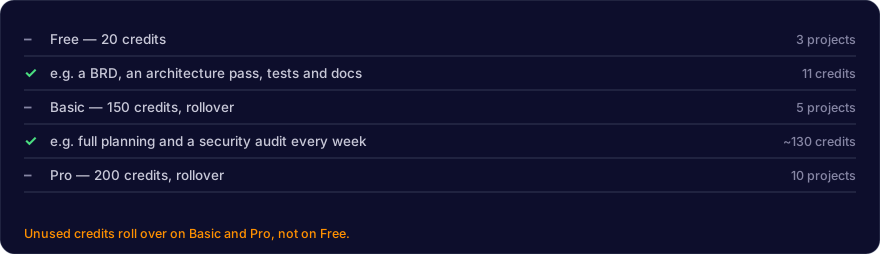
Free gives you 20 credits and three projects. That is enough to plan one application properly — a BRD, an architecture pass, tests and documentation comes to about eleven — with room to run a security audit before you show anyone.
Basic and Pro add rollover, which matters more than the headline number if your work is uneven. Most people do not consume credits at a steady rate; they plan intensively for a week and then build quietly for three. A plan without rollover punishes exactly that pattern.
The cost nobody puts on the pricing page
Credits are the visible cost. They are rarely the largest one.
The expensive thing is regeneration you did not plan for: discovering in month three that the data model was wrong, and paying again for every screen that depended on it. That is not a credit problem, it is a planning problem, and it is why eleven credits spent before any code exists is usually the cheapest spending in the project.
The second expensive thing is review. Generated code still needs someone to read the schema, one write endpoint, and anything touching money or permissions. That is an afternoon of a person who costs considerably more per hour than any of this.
How to think about it
Do not budget per generation. Budget per application, and assume you will plan once, generate several times, and run the quality agents before anything faces a user.
For a typical small application that is roughly: planning 8–12 credits, generation, then a security audit and tests before launch at 7. Under 25 credits to go from a paragraph to something you would let a customer touch — which fits inside Free for one project, and inside Basic comfortably for several.
The number to watch is not credits per month. It is how many times you regenerate because the plan was wrong, and that number is set before you spend the first credit.